
How to Polish Travertine Floors: A Step-by-Step Guide
Travertine floor surfaces are not just elegant. They are timeless. However, their natural beauty does not stay intact. The reason behind this is daily foot traffic spills and grit. Not to forget, the wrong detergents can leave them looking dull and worn.
Are you wondering how to polish travertine floors? To get that smooth and soft glow?
Etching, light scratches, and cloudy patches, you cannot avoid them. But the good news is that with the right process, you can restore the shine to your travertine floors.

What Makes Travertine Different From Other Stones?
Here’s what most homeowners don’t realize…
Travertine is a porous form of limestone. That means, unlike granite, they easily absorb liquids. Furthermore, if any acidic substance is spilled accidentally, it will react.
Understanding the difference between honed and polished travertine is also important. Honing smooths the surface with no shine and no reflection - a classic clean look that is favored by homeowners. Polishing enhances shine after honing through the use of abrasives and finer sanding. Many DIYers confuse the two and skip steps.
If your floor has deep etches or uneven tiles - lippage, it requires professional correction before polishing.
What Are The Tools and Materials Needed To Polish Travertine Floors?
Before polishing travertine floors, gather the right supplies:
Neutral pH stone cleaner (the best cleaner for travertine tile)
Diamond polishing pads (400–3000 grit progression)
Floor buffer or polishing machine
Stone polishing powder
Wet/dry vacuum
Stone sealer
It is important to note that to avoid wrong travertine floor polish or wax-based products. They basically trap dirt, and over time, you will see the floor look duller.
What Are The Steps Involved In Polishing Travertine Floors?
Step 1: Deep Cleaning
Start with a thorough cleaning of travertine floors. Here, you need a pH-neutral cleaner. Remove all dirt and grit. Make sure no small debris is left, they can scratch the surface during polishing.
Then, let the travertine floor dry completely.
In entryways and kitchens, fine sand and grit often settle deep into the pores, especially if shoes are worn indoors. Over time, that trapped debris slowly scratches the surface.
Step 2: Repair Holes and Pits
Travertine naturally has small voids. Fill visible holes with stone filler before polishing.
If cracks or major damage are present, consider choosing a travertine restoration service before proceeding.
Step 3: Honing (The Real Foundation of Shine)
This is where many DIY attempts go wrong.
Attach a 400-grit diamond pad first. After that, begin to smooth the surface evenly. Progress gradually to 800, 1500, and then 3000 grit.
This step helps remove scratches from travertine and eliminate light etching. Without proper honing, polishing alone won’t restore clarity. This is why floors sometimes look shiny in one area but cloudy in another, because the surface wasn’t evenly honed before polishing began.
Step 4: Polishing Stage
Now apply polishing powder. Next, use your buffer to enhance the shine. Keep the surface slightly damp and move consistently to avoid swirl marks.
This is the actual stage of how to polish travertine tile and achieve that refined finish.
Step 5: Sealing After Polishing
Many competitors skip this. Don’t.
Sealing travertine after polishing is very important. It protects against stains and moisture. Moreover, travertine is porous, so you cannot skip sealing it, only if you are after long-term durability.
Allow proper curing time before foot traffic.
For larger areas like offices or hotels, look for commercial stone polishing services.
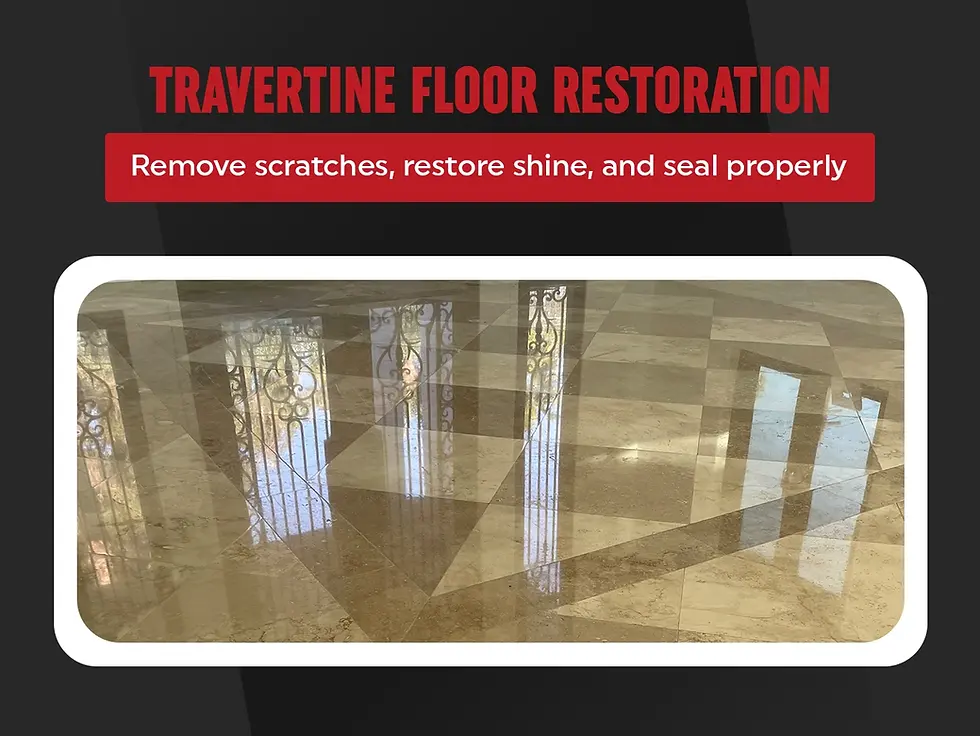
What Are The Common Mistakes to Avoid During Polishing Travertine Floors?
Using acidic cleaners like vinegar
Applying wax-based travertine floor polish
Skipping sealing
Over-wetting the surface
Ignoring deep etching
Over time, these mistakes lead to expensive repairs.
What Is The Difference Between DIY vs Professional Polishing
DIY polishing works for:
Light dullness
Small residential areas
Minor surface scratches
However, better consistency and dust control are offered by professional equipment.
Areas with heavy traffic or significant damage may require professional stone restoration for a long-lasting outcome.
The cost of professional travertine polishing typically depends on the level of damage, square footage, and whether repairs or sealing are included. Deep scratch removal or extensive honing may increase costs slightly, but professional restoration often prevents more expensive replacement later.
If you are unsure, seek more insight from a Marble & Natural Stone Care Guide.
What Are The Maintenance Tips After Polishing?
Proper travertine tile maintenance involves a lot of factors. Here are the most important ones that you should not ignore:
Sweep regularly to prevent grit scratches
Use only pH-neutral cleaners
Reseal every 1–3 years, depending on traffic
Avoid frequent steam cleaning
Depending on the traffic at your residence or business, areas with high traffic need yearly cleaning as part of the maintenance protocol and will need polishing and sealing every 3 to 5 years. Outdoor areas must be re-honed and re-sealed every 2 to 3 years due to their exposure to the different weather conditions year-round.
Frequently Asked Questions
How do you polish travertine floors?
The travertine must undergo different levels of sanding, where each level serves a different purpose. Then, after the diamond sanding at multiple grits or levels, the polishing process starts.
Can travertine polish be done without a machine?
While small areas can be hand-buffed, machines are always best for even pressure and shine. Large surfaces will require professional equipment to buff effectively.
How frequently should travertine floor polishing be done?
For homes and residential spaces, travertine floor polishing could be generally done every 2-3 years.
Final Thoughts
Knowing how to polish travertine floors the right way protects both the beauty and lifespan of your stone. Cleaning, honing, polishing, and sealing all matter. Skip a step, and the shine won’t last.
At Titans Natural Stone Restoration, every travertine floor is restored with care and true craftsmanship. From travertine floor restoration in Corona Del Mar to polishing services in Fullerton, CA, each project is handled with precision and attention to detail.
Years of scratches, dull spots, and etching don’t have to stay. With the right tools and professional techniques, natural stone can look rich and vibrant again.
If your travertine has lost its glow, trust Titans Natural Stone Restoration to bring back its natural beauty. Reach out today and give your floors the professional finish they deserve.


Comments